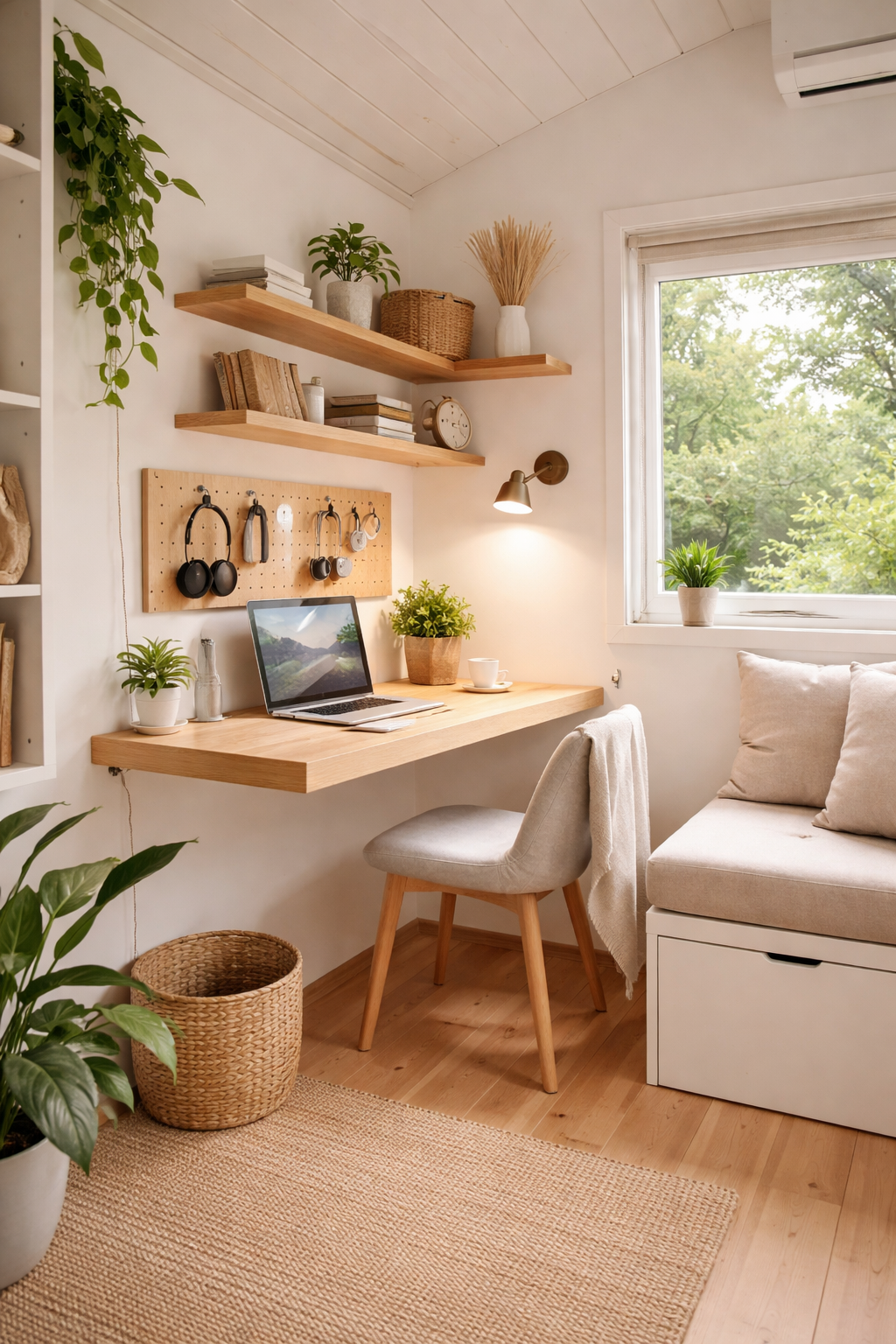
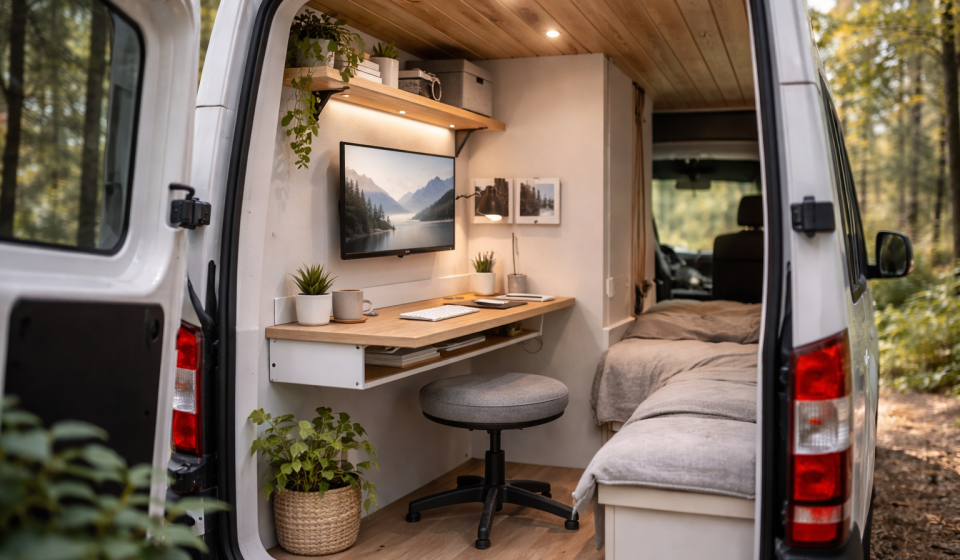
Wall Mounted Desk: Designing a Floating Workspace That Actually Works
Living smaller doesn’t mean working smaller.
Table Of Content
- What Is a Wall Mounted Desk (And Who Is It Actually For?)
- The 4 Types of Wall Mounted Desks (And When Each Works)
- 1. Floating Shelf-Style Desk
- 2. Wall Mounted Folding Desk
- 3. Fold Away Cabinet-Style Desk
- 4. Corner & Compact Wall Mounted Desks
- How to Install a Wall Mounted Desk Properly
- How to Make a Wall Mounted Desk Look Built-In
- Shelving Above
A wall mounted desk isn’t just a space-saving trick — it’s a design decision. Done well, it can make a room feel lighter, cleaner and more intentional. Done badly, it becomes a wobbly shelf bolted to plasterboard.
The difference isn’t the product.
It’s the thinking behind it.
This guide breaks down how to design a wall mounted desk that feels architectural — not temporary.
What Is a Wall Mounted Desk (And Who Is It Actually For?)
A wall mounted desk is exactly what it sounds like: a desk surface fixed directly to the wall, with no traditional legs touching the floor.
It can be:
- A floating shelf-style desk
- A wall mounted folding desk
- A fold away cabinet-style desk
- A compact corner-mounted solution
But here’s what most articles miss:
It’s not about saving space.
It’s about controlling visual weight.
Wall mounted desks work best for:
- Small flats
- Multi-use rooms
- Hallways or alcoves
- Bedrooms doubling as offices
- Minimalist interiors
- Tiny homes
If you’re designing for extremely compact living, our Tiny House Desk: How to Design a Workspace That Actually Works article explores how fixed, minimal desks transform very small footprints.
The 4 Types of Wall Mounted Desks (And When Each Works)
Not all wall desks are equal. Choosing the wrong type is where most setups fail.
1. Floating Shelf-Style Desk
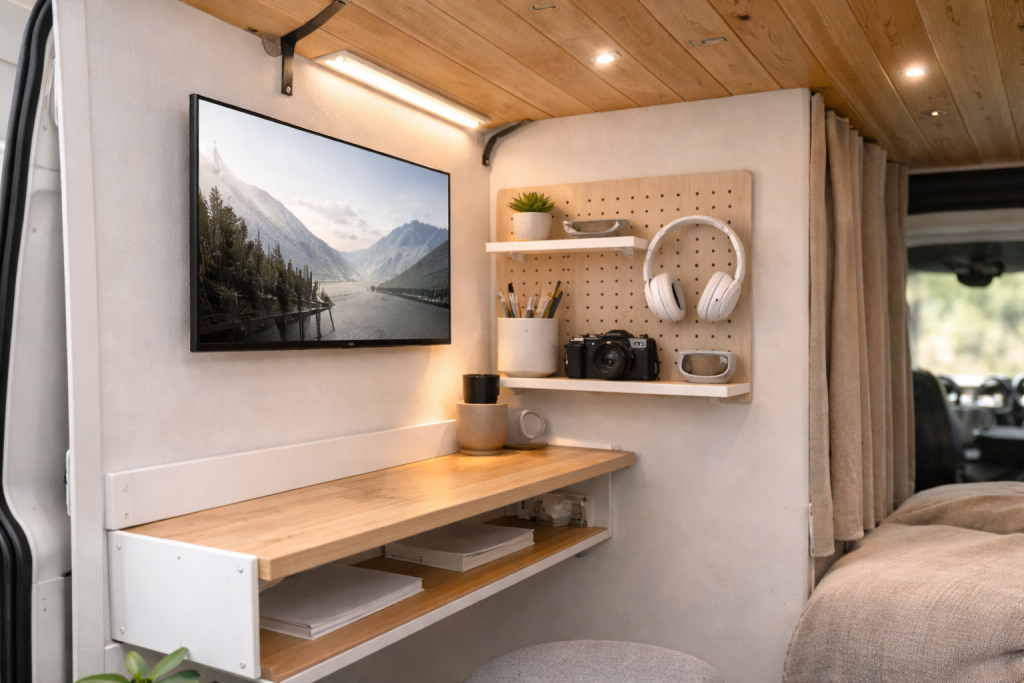
This is the purest form: a thick shelf mounted securely into studs or masonry.
Best for:
- Permanent setups
- Minimal, design-led rooms
- Clean cable management
- Pairing with a proper office chair
With no legs, the floor stays visually open. The desk becomes part of the wall rather than an object placed in front of it.
To preserve that floating effect, cable routing must be intentional. If cables are an afterthought, the illusion breaks instantly.
Check out our article for tips on how to keep cables hidden here.
2. Wall Mounted Folding Desk
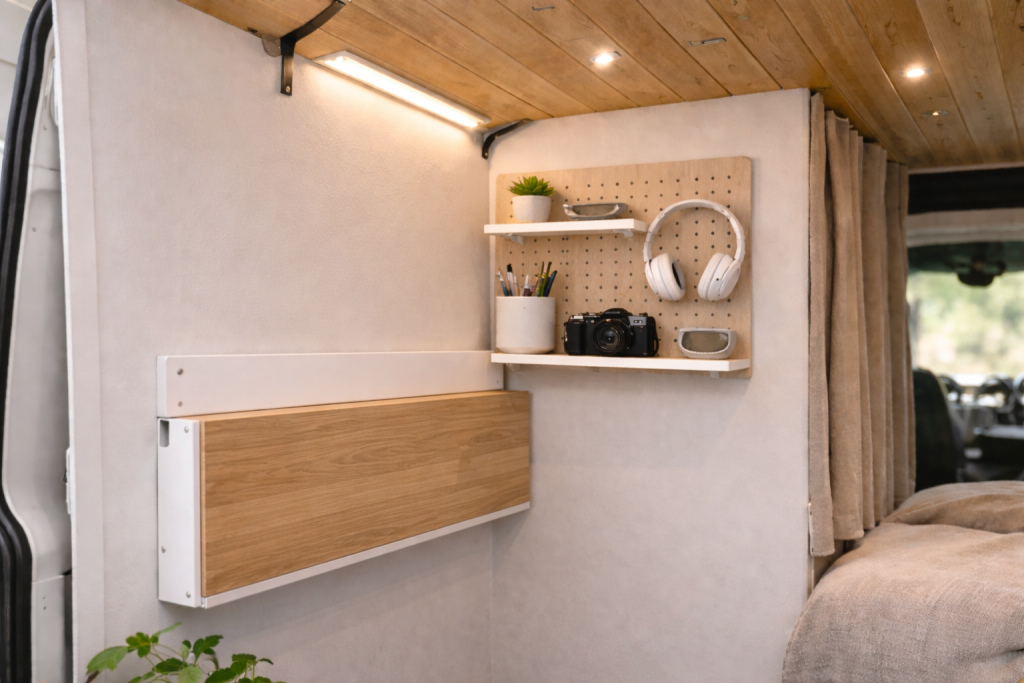
A wall mounted folding desk (also called a fold down or drop down desk) hinges against the wall and folds flat when not in use.
Best for:
- Ultra-small spaces
- Hallways
- Spare bedrooms
- Rooms that need to switch purpose quickly
When closed, it should visually disappear.
When open, it should feel intentional — not temporary.
If your goal is to make compact rooms feel larger, pairing a fold-down desk with visual lightening techniques makes a dramatic difference.
See our article on How to Make a Desk Feel Bigger Without Buying a New One to maximise your space with a wall mounted folding desk.
3. Fold Away Cabinet-Style Desk
This version looks like a shallow wall cabinet when closed.
Inside, it hides:
- A work surface
- Shelving
- Cable cut-outs
Best for:
- Bedrooms
- Living rooms
- Shared spaces
The aim is simple: no visible “office” when you’re not working.
This approach mirrors many of the principles we discussed in our small-footprint workspace design breakdown.
4. Corner & Compact Wall Mounted Desks
Corners are often dead space.
A compact wall mounted desk fitted into a corner can:
- Create a workspace without stealing an entire wall
- Reduce visual intrusion
- Make use of awkward architectural areas
For deeper strategies on reducing visual bulk, see:
How to Make a Desk Feel Bigger Without Buying a New One
How to Install a Wall Mounted Desk Properly
A floating desk must be structurally secure.
- Fix Into Studs or Masonry
- Consider Weight Load
- Get the Height Right
Before installation, it’s worth planning your cable exit points and routing strategy. It’s far easier to build this into the wall phase than retrofit later.
How to Make a Wall Mounted Desk Look Built-In
A wall mounted desk should not look like something “added later.”
It should look like it belongs to the room.
Here’s how:
- Paint Integration
- Lighting Integration
- Cable Discipline
If you haven’t yet read it, our full breakdown on eliminating visual cable noise goes much deeper into this principle: Hide Desk Cables: How to Do It Like a Designer
Shelving Above
Vertical balance matters.
Adding a shelf above creates structure — similar to how we approached spatial layering in our small-space design guide.