How to Design a Desk Setup That Really Boosts Focus
We tend to treat focus as a battle of willpower — one we keep losing to phones, emails, and an endless stream of distractions. But the truth is, focus is often less about discipline and more about design. The way your desk is arranged, lit, and even coloured can have a quiet yet powerful effect on your ability to concentrate.
Table Of Content
In our last article, Why Your Desk Setup Really Needs Design-Level Attention, we explored why your desk deserves design-level attention. This time, we’re putting that principle into action — showing how intentional design choices can actually help you think more clearly, work more deeply, and feel more present at your desk.
The Psychology of Space and Focus
Clutter doesn’t just crowd your desk — it crowds your mind. Research in environmental psychology consistently shows that visual noise competes for mental bandwidth. When everything around you is demanding attention, your brain has less room to think.
That doesn’t mean your space should look sterile or empty. It simply means that every item should have a purpose — even if that purpose is emotional. A single framed photo or a favourite notebook can be grounding, while piles of “stuff” are mentally expensive.
“A clear surface doesn’t just look good — it lets your mind breathe.”
When your environment feels intentional, it signals to your brain that what happens here matters. Focus starts to feel natural rather than forced.
Layout: How Positioning Shapes Flow
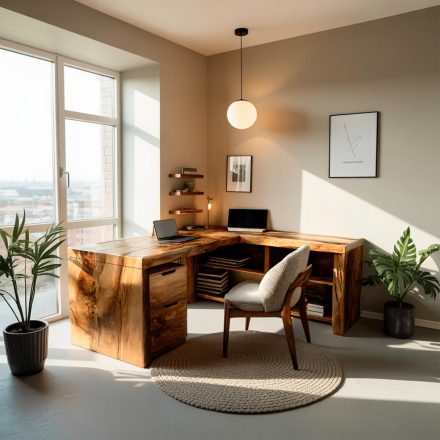
The way your desk is positioned can quietly influence your energy and concentration. Facing a wall helps minimise visual distraction, while facing a window can provide mental rest during breaks. There’s no single rule — what matters is alignment with your workflow.
Keep your essentials within arm’s reach. Screens should sit roughly at eye level, and your chair height should let your elbows rest at a comfortable 90 degrees. These ergonomic touches aren’t just about comfort; they reduce the micro-tensions that chip away at focus over time.
And if you can, give your workspace boundaries. Even in a small room, a change in rug texture or lighting can help separate “work mode” from “home mode.”
Light: The Unsung Hero of Concentration
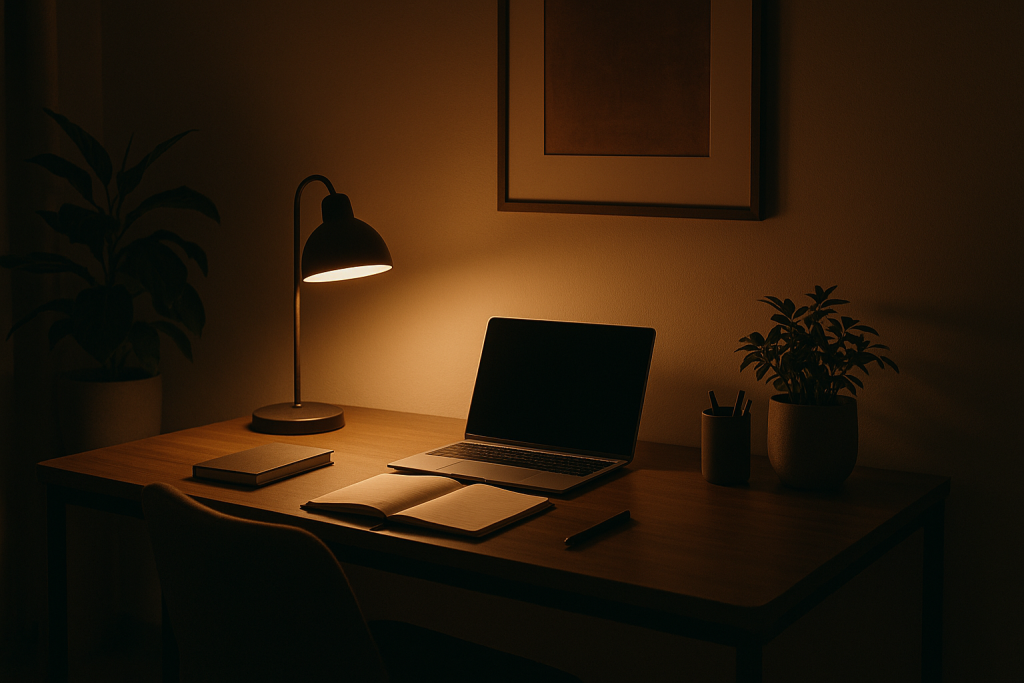
Light dictates how alert or sluggish you feel more than you might realise. Natural light, in particular, regulates your circadian rhythm — boosting energy in the morning and promoting calm in the evening.
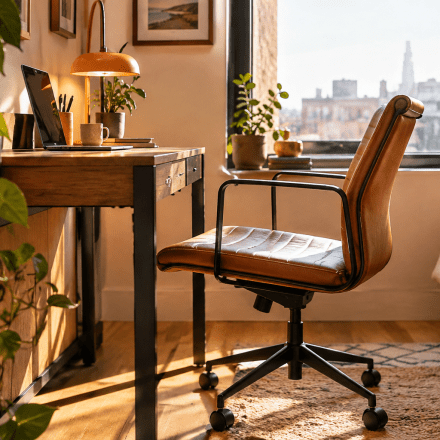
If your desk can face a window, do it. If not, aim for a mix of diffused ambient lighting and focused task lighting. A warm, directional lamp creates a bubble of clarity around your workspace, while soft background light keeps the room from feeling harsh or clinical.
“The best desk lighting doesn’t just help you see — it helps you think.”
Small shifts — like swapping a cool-white bulb for a warm one or dimming lights after sunset — can make deep work sessions feel far more sustainable.
Texture, Colour, and Tone for Mental Clarity
A focused desk doesn’t have to be monochrome, but it should be calm. Muted or matte surfaces prevent glare and reduce visual tension. Wood, linen, and other natural materials subtly absorb light rather than bounce it back — which helps create a grounded, comfortable atmosphere.
When it comes to colour, neutral palettes work best for long stretches of concentration. Think soft whites, gentle greys, or warm beige tones, paired with a single accent colour — perhaps a muted green from a plant or a navy notebook. The aim is balance, not boredom.
Your desk should feel like visual silence: quiet, but alive.
Declutter Without Sterilising
Minimalism has a way of swinging too far. A perfectly empty desk can feel impressive in a photo but cold in reality. Personality matters.
The trick is to keep fewer, more meaningful objects. A single plant adds life and movement; a well-chosen coaster or pen holder gives a tactile rhythm to your space. These small moments of design personality make your desk feel like yours, while still keeping your visual field clear.
A simple rule: if it doesn’t serve your work or lift your mood, it probably doesn’t belong.
Design Rituals, Not Just Layouts
True focus isn’t just about where things go — it’s about what those things mean. Design rituals can reinforce your mindset.
Tidy your desk at the end of each day as a small “reset.” Open the blinds in the morning to signal the start of work. Maybe you light a candle or start a playlist when you sit down. These cues train your brain to associate your workspace with attention and flow.
Over time, your desk becomes more than a surface. It becomes a signal — a quiet reminder that this is where you do your best thinking.
Focus by Design
Focus isn’t found in an app or a productivity hack. It’s built — one design choice at a time.
By shaping your space intentionally, you create conditions where focus feels easier, calmer, and more natural. The goal isn’t perfection — it’s presence.
Because when your desk works with your mind instead of against it, focus stops being something you chase, and becomes something you simply arrive at.
Next time, we’ll explore how lighting shapes not just focus but mood — and how small lighting changes can transform your workspace atmosphere. Subscribe below to get the article when it drops.