Minimalist Desk Setup Checklist for a Focused Workspace
Minimalism isn’t about stripping your desk bare. It’s a deliberate design choice: keep what you need, remove what you don’t, and organise everything so your workspace supports focus rather than competing for attention. A minimalist desk should feel effortless — not sparse by accident, but pared back by intention.
Table Of Content
- 1. Minimalist Desk Essentials
- The items every minimal workspace needs
- Must-have furniture for a minimalist desk
- 2. A Minimalist Desk Setup Checklist
- On-desk organisers (only what you actually need)
- Refined, intentional minimalist accessories
- 3. Minimal Workspace Essentials
- Selecting the right lighting for near-effortless, distraction-free clarity
- Managing cables for a serenely organised workspace
- 4. Desk Organisation for Unwavering Productivity
- Create functional zones on your desk
- Keep daily tools visible and everything else hidden
- Small habits that maintain a minimalist desk
- 5. Materials, Textures and Colour — The Quiet Details
- 6. Personalisation Without Clutter
- 7. Final Thoughts — Minimalism as a Built Habit
This checklist is for anyone who values clean lines, thoughtful objects and practical simplicity. It’s a design-first approach that helps you build a desk that looks good, feels good to use, and keeps distractions to a minimum.
1. Minimalist Desk Essentials
(The foundation of a calm, functional workspace)
Minimalism starts by defining essentials — the items that need to be on or around your desk for work to actually happen. Everything else is optional.
The items every minimal workspace needs
- A solid desk surface with enough room for your primary tasks.
- A monitor or laptop at an ergonomic height.
- A keyboard and mouse that are comfortable for long use.
- A slim desk mat to define the working area and protect the surface.
- A supportive chair that keeps posture in check.
These are the structural pieces. When they’re right, the desk feels balanced even when in use. The aim is not to own less for the sake of it, but to own only objects that improve your work.
Must-have furniture for a minimalist desk
Furniture counts. The desk and chair are the stage on which everything else performs.
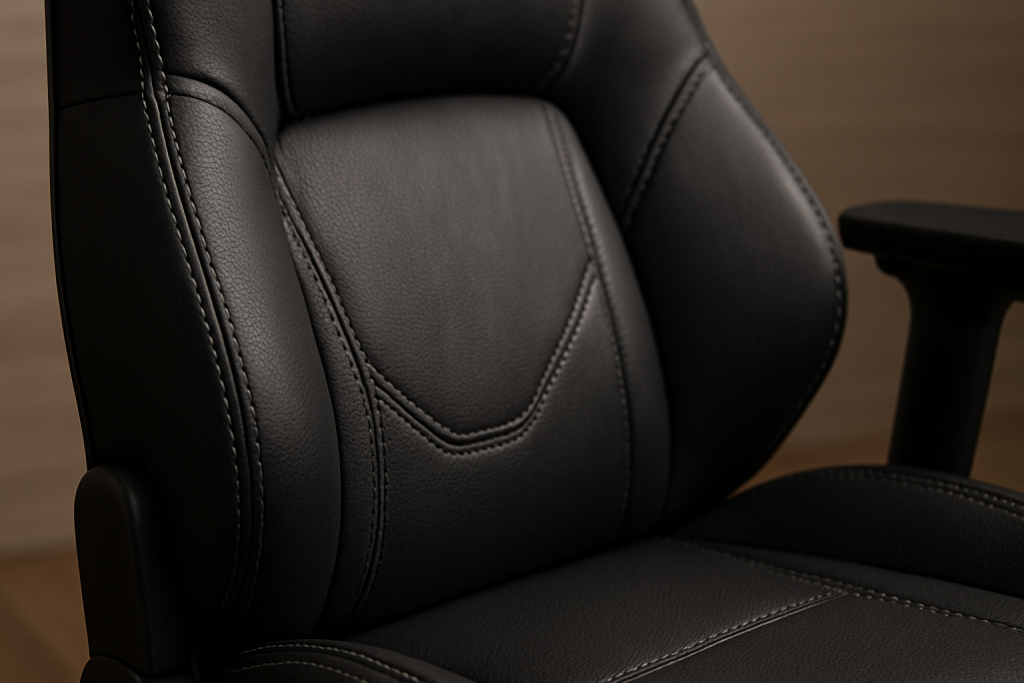
- Choose a desk with a slim profile and a neutral finish — it shouldn’t visually dominate the room.
- Select a chair that offers real support rather than a purely aesthetic seat. Comfort sustains focus.
- Consider a laptop stand to elevate the screen; it frees space underneath and improves posture.
A laptop stand or monitor arm changes the desk’s visual weight. Raising screens clears foreground space and instantly makes a desk feel more intentional.
2. A Minimalist Desk Setup Checklist
(A practical, skimmable guide to what to keep on the surface)
Use this checklist as your “core loadout” — the items that keep the desk functional without crowding it.
On-desk organisers (only what you actually need)
Minimalism doesn’t mean zero storage. It means just enough.
- A single tray to catch keys, wallet and small daily items.
- A slim pen pot — limit to the pens you use.
- A small notebook or slim notepad for quick notes.
- An under-monitor shelf if you need one discreetly for a keyboard or small items.
The purpose of organisers is to reduce loose items that visually fragment the workspace. Less stuff on the surface equals less visual processing by your brain.
Refined, intentional minimalist accessories
Accessories should be purposeful and restrained.
- One small plant to bring life to the desk.
- A coaster to avoid coffee rings.
- A single personal or decorative object — a small print, sculpture or photograph.
- Cable clips to keep chargers tidy and out of the way.
- A slim task lamp or monitor light bar for focused illumination.
Accessories are where minimalism either succeeds or collapses. Be selective. If an item doesn’t provide functional value or quiet pleasure, it doesn’t belong here.
3. Minimal Workspace Essentials
(Elements beyond the desk surface that shape the environment)
Your desk doesn’t exist in a vacuum. The surrounding elements — lighting, cables, storage — determine whether a minimalist desk actually feels minimal.
Selecting the right lighting for near-effortless, distraction-free clarity
Good lighting is quiet. It helps you see without being a visual focal point.
- Use a task light that creates a focused pool of illumination on your workspace.
- Ambient lighting should prevent harsh contrast between screen and room.
- Avoid overly blue, clinical light during long work sessions; neutral-warm tones are kinder on the eyes.
A small, adjustable desk lamp that tucks behind a monitor or off to the side keeps the surface well lit while remaining unobtrusive. Lighting should support the work, not shout.
We discuss different lighting techniques in our article “Workspace Lighting: How to Design Lighting That Helps You Focus” to help boost both your focus and aesthetic style of your desk setup.
Managing cables for a serenely organised workspace
Cable management is a foundational minimalist habit.
- Route cables along the desk’s rear edge or down a leg.
- Mount extension leads under the desk to keep power bricks off the floor.
- Use a single braided sleeve for multiple cables to reduce visual clutter.
- Label chargers where helpful so you’re not rummaging around.
- If appropriate consider using a cable management box.
A desk tidy from the front and tidy from underneath is the hallmark of considered minimalism. We’ve gone into more detail on how to keep desk cables hidden here.
4. Desk Organisation for Unwavering Productivity
(Design choices that directly support deeper focus)
Minimalism is as much about workflow as it is about looks. The way you organise your desk will either help you slip into flow or pull you out of it.
Create functional zones on your desk
Divide the desk into practical areas:
- Primary zone: monitor, keyboard, core workspace — everything here should be within easy reach.
- Support zone: notebook, pen, headphones — items you use frequently but not continuously.
- Charging/utility zone: power, adapters and external drives — keep these grouped and hidden where possible.
Zones prevent everything from collapsing into one messy pile and make the desk easier to maintain.
Keep daily tools visible and everything else hidden
A simple rule to minimize friction:
- If you use it daily, keep it visible.
- If you use it weekly, store it nearby.
- If you rarely use it, remove it entirely.
This triage keeps the desk both functional and visually restful.
Small habits that maintain a minimalist desk
Minimalism is a small-ritual practice, not a one-off tidy.
- End-of-day reset: 60 seconds to clear the surface and return items to their place.
- One-in, one-out: when you introduce a new object, remove an old one.
- Weekly micro-declutter: a quick sweep to catch drifting clutter before it accumulates.
These tiny routines pay large dividends in sustained clarity.
5. Materials, Textures and Colour — The Quiet Details
(How to make a minimalist desk feel premium without fuss)
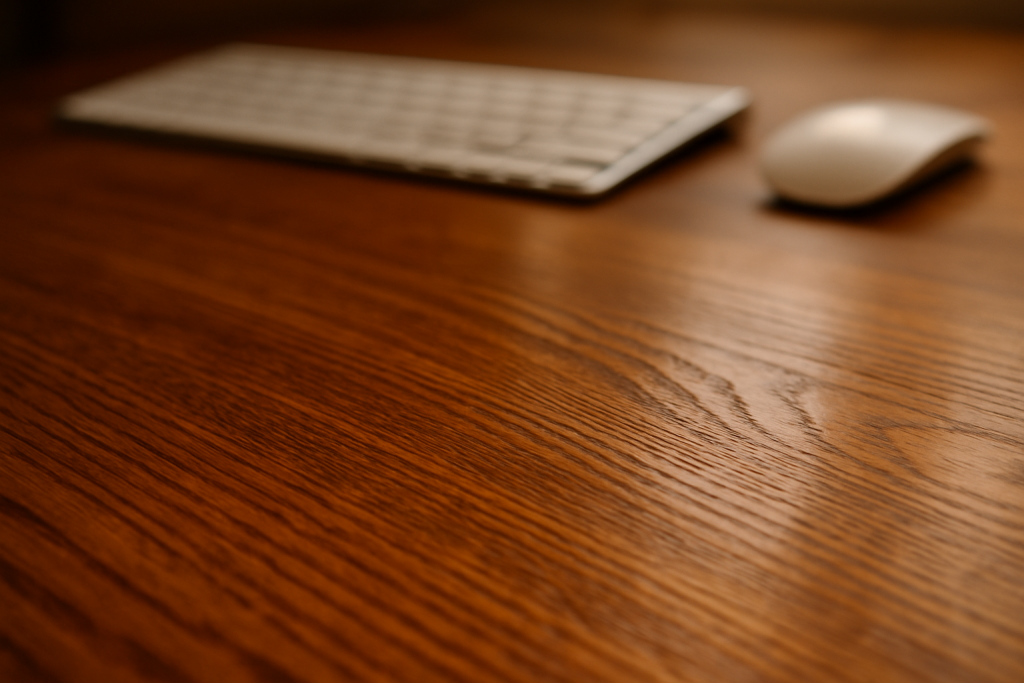
Minimalism benefits from subtlety. Materials and finishes determine whether a desk feels considered or cheap.
- Use a muted palette: off-whites, soft greys, warm woods and black accents.
- Choose finishes with tactile appeal — matte metal, fine-grain wood, soft desk mats.
- Resist pattern overload; texture is enough to give depth without visual noise.
The goal is cohesion. Materials should harmonise so the desk reads as a single, calm composition.
6. Personalisation Without Clutter
(How to keep personality while staying minimal)
You don’t need to remove personality to be minimalist — you just need to be intentional about it.
- Choose one personal object: a small framed photo, a single sculpture, or a meaningful book.
- Rotate items seasonally rather than accumulating them. Perhaps consider keeping these items in a drawer until the season changes. Remember – out of sight, out of mind!
- Keep personal items small and placed in the support zone rather than the primary working area.
This way, the desk remains a reflection of who you are, but not a distraction from what you do.
7. Final Thoughts — Minimalism as a Built Habit
A minimalist desk isn’t an aesthetic trend. It’s a method for making work easier and clearer. The items in this checklist are not rules to follow blindly; they’re tools to refine your environment until it supports long stretches of focused, enjoyable work.
Start with the essentials, add only what helps, and maintain the habit. Minimalism isn’t an absence — it’s the presence of clarity.