
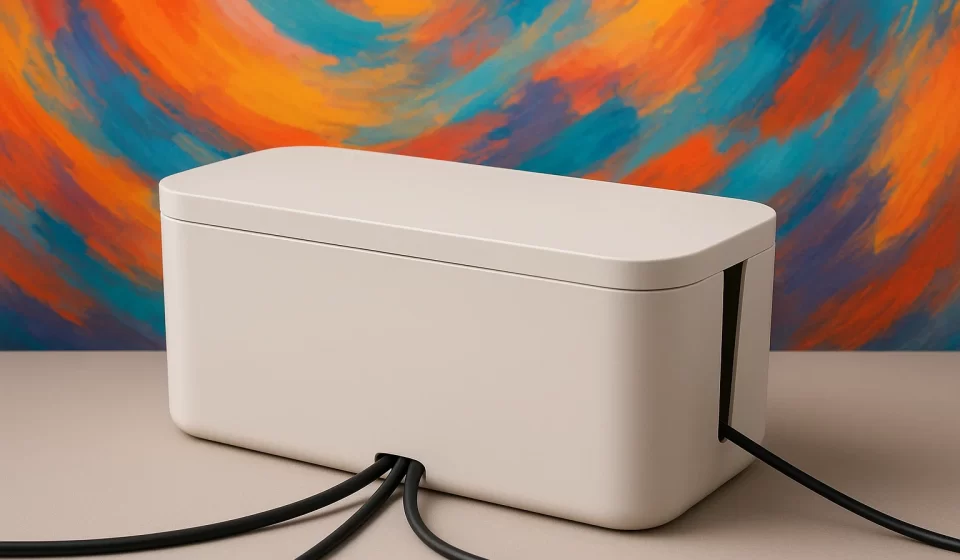
Best Cable Management Box: Clean, Hidden, and Actually Worth Using
If you’ve ever looked under your desk and felt a quiet sense of dread, you’re not alone. Power bricks, extension cords, and adapters have a way of turning even the most considered workspace into chaos. A good cable management box is the simplest way to reclaim visual calm — hiding bulk without compromising access or airflow.
Table Of Content
If you haven’t yet tackled the cables themselves, start with our guide on How to Hide Desk Cables — it walks through the best ways to route and secure cables before you even reach this stage. Once that’s sorted, a management box is the finishing touch that keeps everything neat, safe, and out of sight.
1. Why a Cable Management Box Matters More Than You Think
The visual clutter under a desk can subtly distract you every day. Cable boxes exist to contain what can’t be eliminated — the power bricks, adapters, and router sprawl that inevitably pile up.
Beyond the obvious aesthetic win, a box also adds safety (no dust buildup around plugs) and practicality (easier cleaning, better airflow). For those who design their desks as intentionally as their work, it’s a small detail that makes a big difference.
2. Cable Box vs Tray: Which Should You Choose?
You’ll often see people debate between a cable management box and a tray — and both serve a purpose.
- Boxes are ideal when you need to hide bulkier power strips or plugs. They sit on the floor or desk shelf and visually disappear.
- Trays, on the other hand, are better suited for under-desk setups, where you want everything suspended and off the floor.
If you’re working with a standing desk, a cable management tray is often the cleaner option — especially when you need movement flexibility. A tray is likely to be less cumbersome so, in that case, look for something labeled “best under desk cable management tray” or “best cable management tray for standing desk.”
Still, for most fixed setups, a box keeps things simpler, safer, and more refined.
3. IKEA’s Cable Management Boxes (and Why They’re So Popular)

It’s no surprise that IKEA has entered the cable management game. Their options — particularly the IKEA Kvissle cable management box — are some of the most common minimalist picks online. You may struggle the Kvissle in your local Ikea store depending on the region – but they have a few alternatives that you will find here.
They’re inexpensive, easy to find, and have that clean Scandinavian form that blends well with most setups. But they’re also best for light-duty setups — one power strip, maybe a couple of adapters.
If you need something that feels more substantial or refined, IKEA’s boxes are a good start but not the final word. Think of them as the “entry-level aesthetic” of cable organization.
4. Reddit’s Take: What Real Users Recommend
Reddit threads on “best cable management tray reddit” and workspace subreddits show a consistent trend — users value ventilation, easy access, and durability more than brand names.
The general consensus?
- Metal trays beat plastic ones for under-desk setups.
- Wooden or bamboo cable boxes are the favourites for design-forward desks.
- The best setup combines both: trays for routing, boxes for hiding.
That balance mirrors what we’ve found in our own testing — a thoughtful mix of function and visual restraint wins every time.
5. Deskfully’s Top Picks
If you’re aiming for a workspace that feels as clean as it looks, these are the types of cable boxes worth considering:
- Wood or bamboo boxes — blend warmth with utility, perfect for pairing with oak or walnut desks.
- Matte black or white ABS boxes — ideal for minimal setups, visually disappearing under darker surfaces.
- Fabric-covered boxes — softer aesthetic for setups that lean toward cozy minimalism.
All qualify as a best cable management box depending on your priorities: concealment, material quality, or design integration. The key is not to overthink — the goal is calm, not complexity.
6. Final Thoughts: Building a Visually Calm Workspace
Cable management isn’t just about hiding wires — it’s about protecting the visual focus of your workspace. Once your cables are routed, bundled, and out of sight, everything else you place on your desk feels more intentional.
Pair a smart cable management box with clean routing (like in our Hide Desk Cables guide) and you’ll end up with something far more satisfying than just “tidy.” You’ll have a desk that actually feels designed.