How to Organize Your Desk for Maximum Focus
Most people think a cleaner desk simply looks better — and it does — but the bigger win is mental. A well-organised desk reduces visual noise, speeds up your workflow, and creates a space your brain recognises as a place to focus. This guide breaks down the exact steps you can take to organise your desk in a way that genuinely boosts concentration, not just aesthetics.
Table Of Content
1. Start With a Clean Slate
Before organising anything, clear the entire surface. Remove everything — monitors, plants, cables, mugs, everything.
This resets your mental model of the space and helps you decide what deserves to return to the desk.
You can do this quickly by:
- Wiping down the surface.
- Check what you actually use daily.
- Remove anything that routinely distracts you.
- Think of this step as decluttering your attention, not just your desk.
2. Define Your “Primary Zone”
Your primary zone is the space you can reach without leaning or stretching.
This is where all daily-use items should live.
What belongs here:
- Keyboard
- Mouse
- Notebook or daily planner
- A single pen (yes, one)
- Your main monitor or laptop
Everything else belongs in secondary zones (drawers, shelves, stands).
Why it improves focus:
Your brain spends less time searching for tools and more time staying locked onto the task.
3. Remove Visual Noise
This is where most focus is lost. Even if your desk is technically “tidy,” a cluttered visual field creates micro-distractions your brain has to process.
Reduce visual noise by:
- Using a single colour palette for accessories
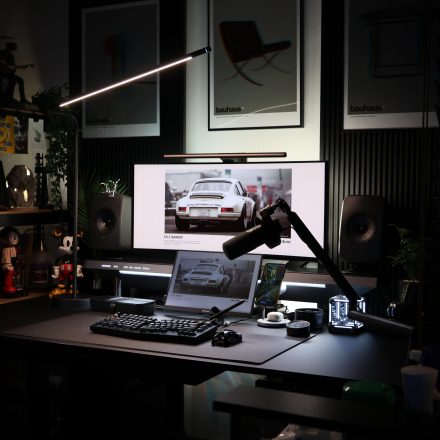
- Hiding cables
- Keeping surfaces mostly empty
- Choosing slim, unobtrusive desk mats or trays
If you haven’t read it yet, our guide “How to Hide Desk Cables Like a Designer” walks through simple ways to clean up the messy underside of your setup — one of the easiest ways to instantly reduce visual stress.
4. Organise by Function, Not by Object
Instead of thinking “Where do I put my pens?” think “When do I use this?”
Group items by how and when you use them:
- Deep work kit: notebook, pen, headphones
- Admin kit: chargers, USB sticks, external drives
- Creative kit: sketchbook, tablets, lens cloths
Store each group together, not scattered across drawers or shelves.
This improves focus because your brain builds muscle memory around tasks — everything is exactly where you expect it to be.
5. Elevate Your Essentials
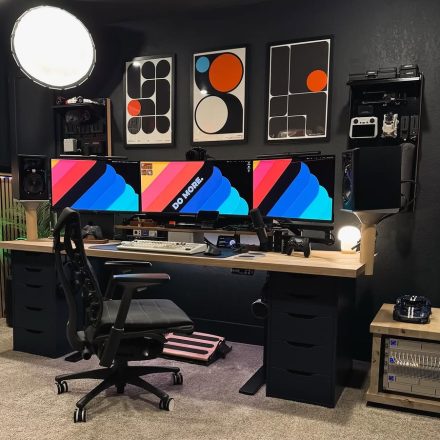
Aesthetic-purist setups thrive on verticality. Lifting items off the desk clears space and creates a calmer, more intentional workspace.
Easy upgrades:
- A monitor arm to free desk space and improve posture.
- A laptop stand for dual-screen setups.
- A small shelf or riser to hold plants, speakers or a candle.
- Wall-mounted pegboards for tools you use often.
Vertical space is free focus — use it.
6. Keep Only One “Personality Object”
Most people overload their desks with sentimental or decorative items.
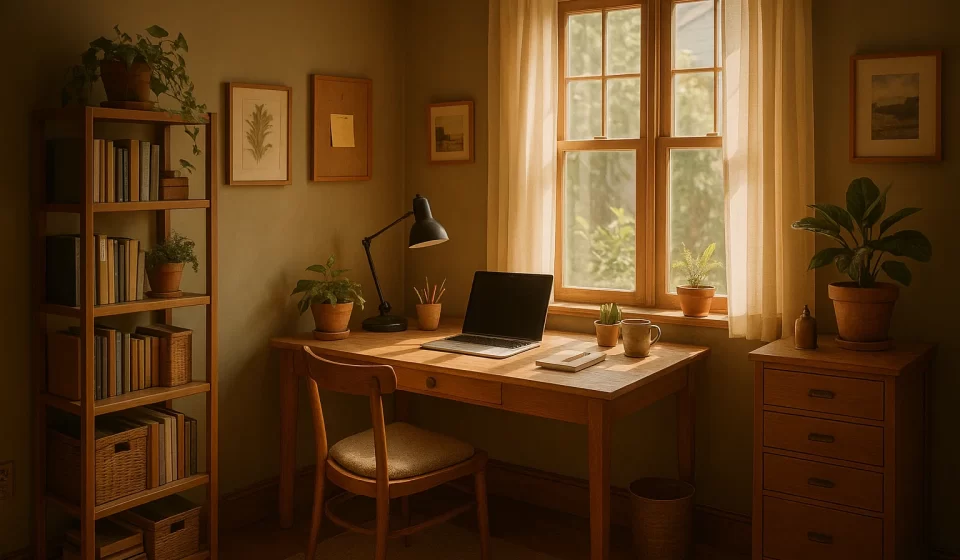
Limit yourself to one object that adds personality without distracting you.
Examples:
- A small plant
- A minimal framed print
- A single sculptural item
- A candle
One item = intention.
Five items = clutter.
7. Create a Daily Reset Habit
A focused desk stays focused only if you maintain it.
End-of-day routine (60 seconds):
- Put everything back in its primary zone
- Remove mugs
- Close your notebook
- Coil or tuck away cables
- Wipe quickly with a microfibre cloth
This gentle reset primes your brain to start the next day with clarity.
Final Thoughts
Organising your desk for maximum focus isn’t about becoming ultra-minimal or rigid.
It’s about reducing visual noise, keeping daily tools within reach, and designing a space that supports deep, uninterrupted work.