Felt Desk Mat: Why It’s the Easiest Upgrade You Can Make to Your Setup
There’s a category of desk accessory that doesn’t look like much in isolation but changes how the whole setup feels the moment it’s in place. A felt desk mat is one of them.
Table Of Content
It’s not a dramatic purchase. It doesn’t add a feature or solve an obvious problem. But a well-chosen felt mat — the right size, the right tone, positioned properly on the desk — does something that’s harder to achieve through more deliberate means: it makes the desk feel considered. Finished. Like somewhere a person actually chose to work rather than somewhere they happened to end up.
This is what it does, why it works, and how to choose one that suits your setup rather than fighting it.
What a felt desk mat actually changes
The most honest answer is: more than you’d expect.
Before trying one, the desk surface felt slightly empty despite having the essentials in place. A mouse mat handled the tracking, but the rest of the surface had no visual anchor. Objects sat on it without any sense of relationship to each other or to the desk itself.
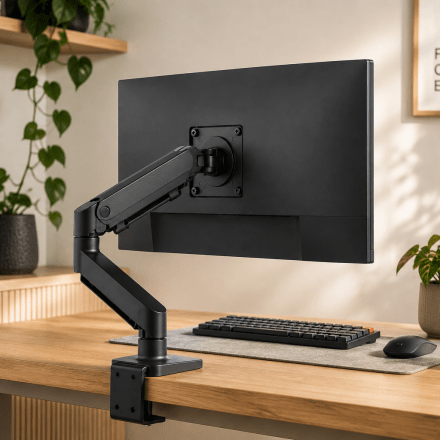
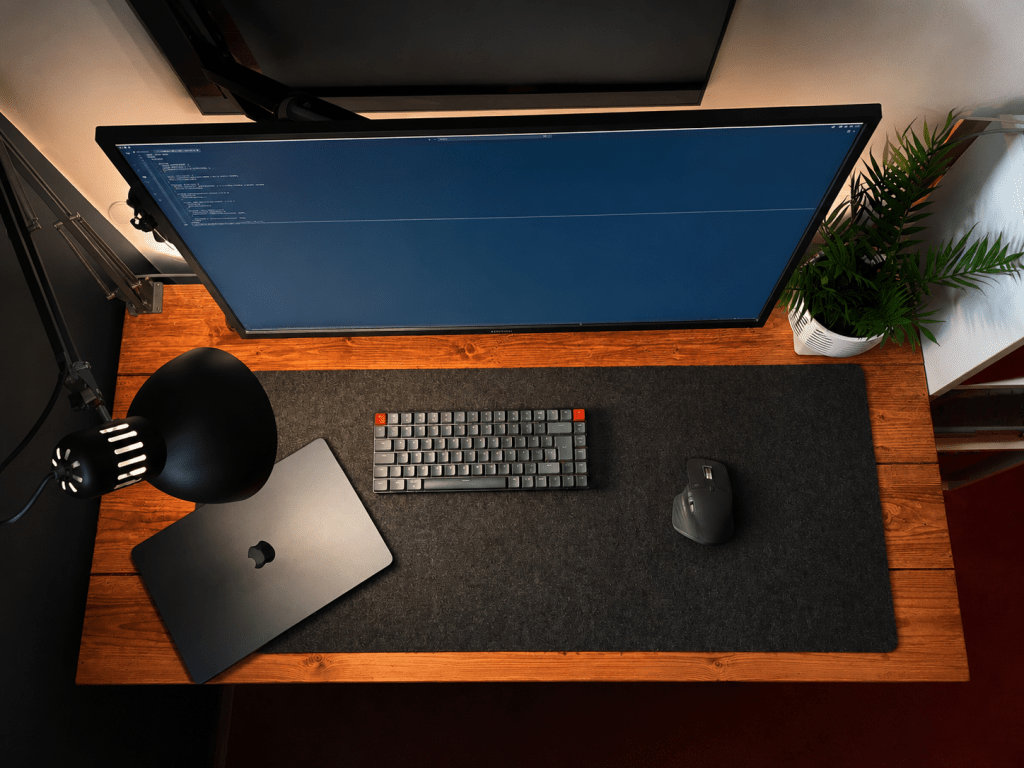
Adding a felt mat — sized to cover roughly 70% of the surface, leaving a few inches of desk visible at each edge — changed the reading of the whole setup immediately. The mouse, keyboard, and lamp suddenly had a defined zone. The desk felt organised without anything being moved or removed. The exposed wood at the edges gave the surface a frame, which made the working area feel intentional rather than incidental.
It’s a small shift in visual logic that has a disproportionate effect on how the desk feels to sit at.
Why felt specifically
Felt isn’t the obvious choice. Leather looks premium and photographs beautifully. Cork is natural and has a tactile quality that suits minimal setups well. Rubber is practical and grippy. All of them have a reasonable case.
The concern with leather in a home office context is that it can read as slightly corporate — fine in a certain kind of workspace, but at odds with a warmer, more personal aesthetic. Cork works well but can feel utilitarian if the rest of the setup leans toward softer materials.
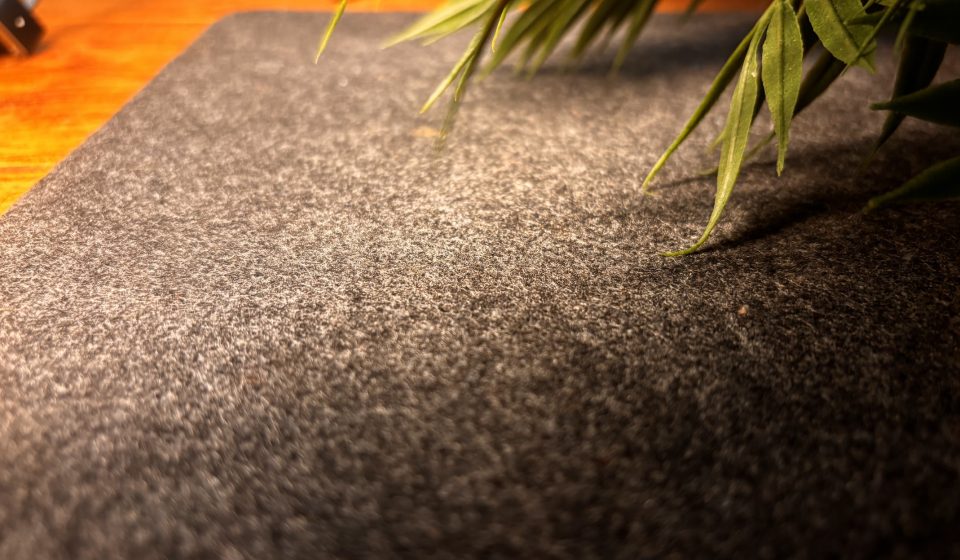
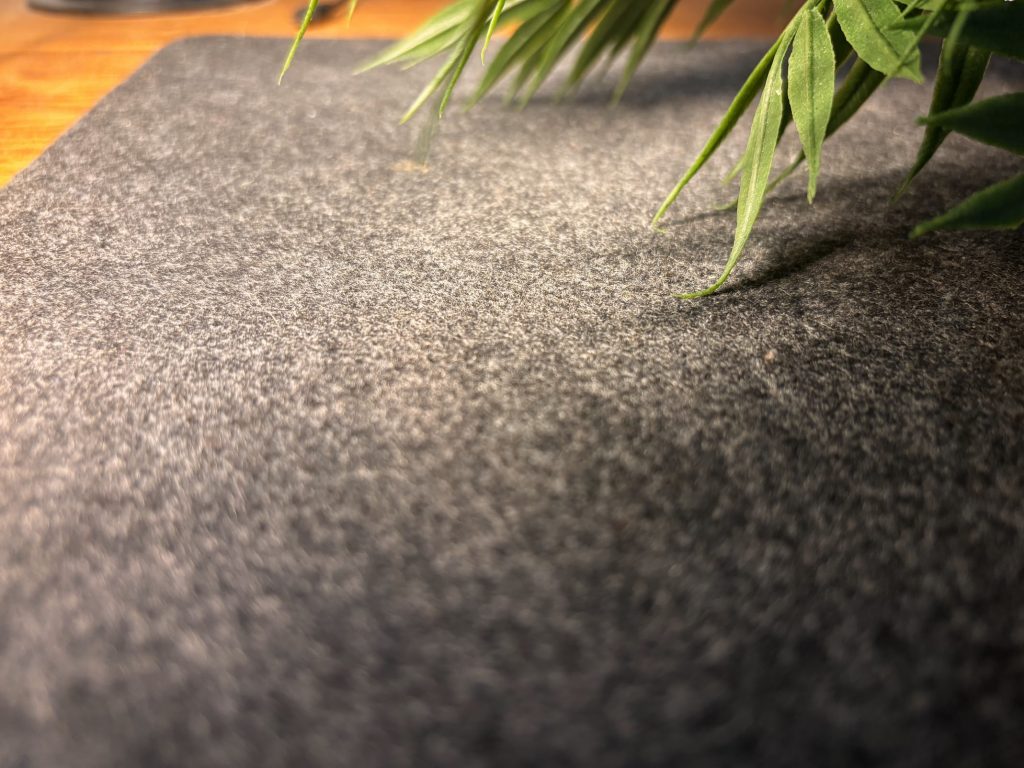
Felt sits in a different category. The texture is warm in a way that’s hard to describe until you’ve used one — there’s a cosiness to it, a softness against the hand during long sessions that neither leather nor cork quite replicates. It also sits quietly in a setup without demanding attention, which is exactly what a desk surface material should do.
The one genuine concern with felt is mouse tracking. Not all mice handle textured surfaces equally, and it’s a reasonable worry before you’ve tried it. With a quality mouse — something with reliable optical tracking — it turns out not to be a problem at all. The texture that gives felt its warmth doesn’t interfere with tracking in the way rougher surfaces can. If you’re running an older or budget mouse, it might be worth checking compatibility before committing. But for most modern mice it simply isn’t an issue.
Getting the right size felt desk mat
This is where most people either overthink it or don’t think about it enough.
The oversized desk mat — covering the entire surface edge to edge — has become increasingly popular and it’s not hard to see why. A full-coverage mat gives the desk a clean, unified look and removes any question about positioning. For setups with darker or less interesting desk surfaces, it’s a straightforward way to improve the aesthetic without replacing the desk itself.
The alternative approach — and the one that tends to work better when the desk surface itself is worth seeing — is to size the mat to the working zone rather than the entire surface. Roughly 70-80% coverage, positioned to sit under the mouse and keyboard with the desk visible at each edge, creates a defined area without hiding the surface beneath it. If you have a wooden desk with grain or warmth worth preserving, this approach lets the material show while still anchoring the working area.
The one we use is the DawnTrees felt desk mat in dark grey, 90x40cm — sized to cover roughly 70% of the desk surface with the wood visible at each edge. At £15.99 it’s one of the better value upgrades available to a small setup.
The key principle either way is intentionality. A mat that’s slightly too small for the setup looks like an afterthought. A mat sized to the working zone looks like a decision.
Colour and tone
Felt desk mats come in a wide range of colours, and the temptation — particularly given how many setups lean into maximalist or accent-colour aesthetics — is to treat the mat as an opportunity to introduce contrast.
For most setups, the opposite instinct produces better results. A neutral tone — dark grey, charcoal, olive, or a warm off-black — sits quietly beneath the objects on the desk without competing with them. The mat’s job is to anchor the space, not to be noticed. A strongly coloured mat becomes a dominant visual element whether you want it to or not.
If the rest of your setup is already neutral and you want to introduce a subtle accent, a muted tone in green or terracotta can work well. But the starting point should be neutral, and departures from that should be deliberate.
The practical side
Beyond the aesthetic, a felt desk mat does a few practical things worth noting.
It protects the desk surface from scratches, marks, and the gradual wear that comes from daily use. On a wooden desk this matters more than it might seem — particularly if the surface has any treatment or finish worth preserving.
It also dampens sound. Not dramatically, but noticeably — keyboard noise in particular is softened slightly by the felt beneath it, which has a small but genuine effect on how calm the workspace feels during long sessions. In a quiet home office this is a minor point. In a shared space it becomes more relevant.
And it stays put. Quality felt mats don’t slide or curl at the edges in the way cheaper rubber-backed options can. The surface remains flat and stable, which matters more during active use than it sounds.
What to look for when choosing a felt desk mat
A few things worth checking before buying:
Material quality — not all felt is equal. Thicker felt (around 3-5mm) sits better, wears better, and feels better than the thin versions that are common at lower price points. It’s worth spending slightly more to get something that will last.
Stitched edges — the edges of a felt mat take the most wear. Stitched or bound edges hold up considerably better than raw cut edges, which tend to fray over time.
Non-slip backing — a mat that moves during use is immediately frustrating. Check that whatever you’re buying has a backing that will hold it in place on your specific desk surface.
Colour accuracy — felt colours in product photography are notoriously unreliable. If tone matters to your setup — and it should — look for reviews with real-world photos rather than relying on the listing image.
One of those purchases you don’t go back from
A felt desk mat is the kind of addition that’s easy to dismiss before you try one and difficult to imagine removing once it’s in place. The desk feels different without it — slightly unanchored, slightly empty in a way that’s hard to articulate but immediately noticeable.
It’s not the most exciting upgrade available to a desk setup. It won’t transform your productivity or solve a significant problem. What it does is make the desk feel finished — and that, quietly, makes a meaningful difference to how much you want to be there.