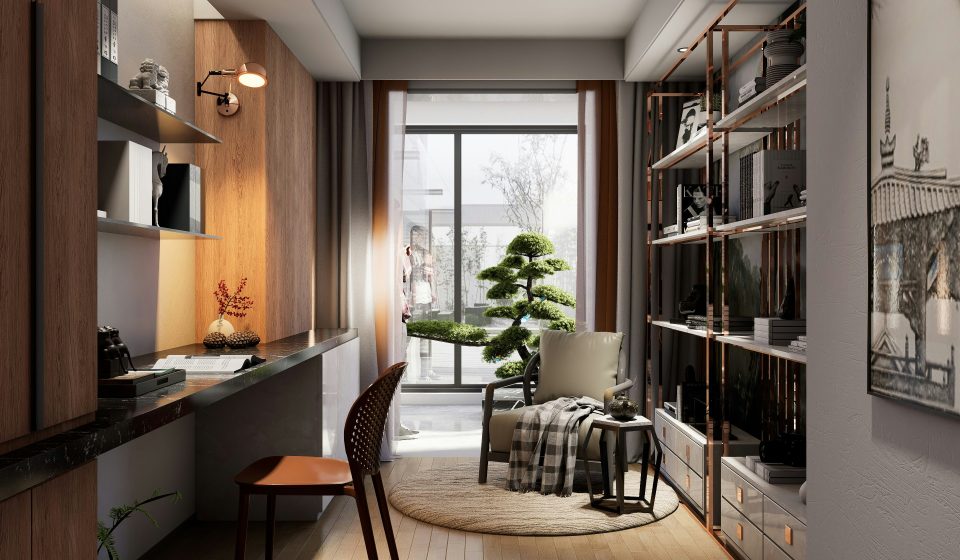
Japandi Home Office: How to Build a Workspace That Feels Genuinely Calm
Japandi is one of those design terms that gets used so frequently it starts to lose meaning. You’ll find it applied to everything from a beige sofa to an entire architectural project, often with little consistency between the two. Which makes it worth asking: what does a Japandi home office actually mean in practice, and is it worth pursuing as a design direction for a workspace?
Table Of Content
- What a Japandi office actually means for your workspace
- The elements that define a Japandi office
- A genuinely neutral palette
- Plants, and ideally plenty of them
- Furniture with considered proportions
- Deliberate, warm lighting
- Where Japandi can go wrong
- A note on personalising the aesthetic
- Where to start with your Japandi home office
The honest answer is that a Japandi home office is yes — with some caveats.. Japandi done well produces workspaces that are genuinely calm, considered and easy to spend long stretches of time in. Japandi done poorly produces spaces that feel cold, slightly sterile, and as though they were assembled by someone who spent too long on Pinterest without ever sitting down to actually work.
The difference between the two is worth understanding before you start.
What a Japandi office actually means for your workspace
Japandi is a hybrid aesthetic — Japanese minimalism crossed with Scandinavian design sensibility. Both traditions share a commitment to simplicity, natural materials and functional objects, but they arrive at those values from different cultural directions. Japanese design tends toward restraint and a kind of deliberate emptiness. Scandinavian design brings warmth, craft and a particular relationship with natural light.
In a workspace context, the overlap between the two produces something specific: rooms that are uncluttered without feeling austere, that use natural materials without becoming rustic, and that prioritise calm without sacrificing function.
It’s an aesthetic that suits a home office particularly well. A workspace designed along Japandi lines tends to reduce visual noise, which has a genuine effect on how easy it is to focus. There’s less for the eye to catch on, less ambient clutter competing for attention.
The elements that define a Japandi office
Natural wood, used simply
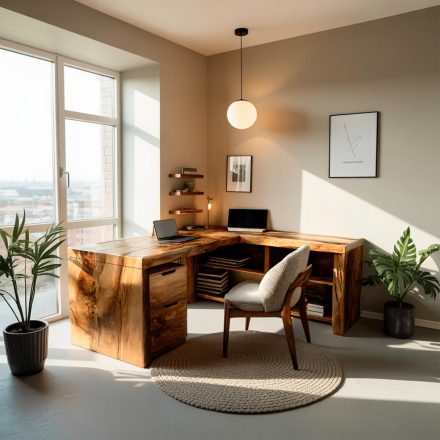
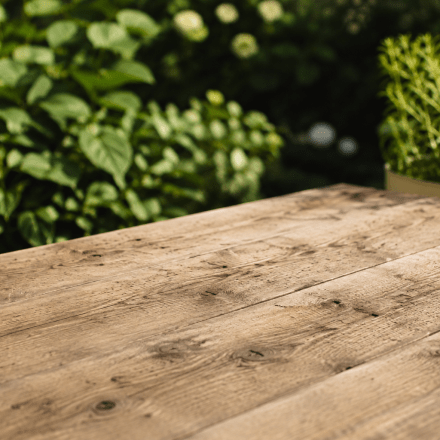
Light wood is probably the most recognisable element of the Japandi aesthetic — pale oak, ash, or birch used cleanly, without heavy staining or ornate detailing. In a desk context, this usually means a simple wooden surface with visible grain, either as a standalone desk or as a mounted floating shelf. The wood does the work. It doesn’t need much else alongside it.
Warmer, darker woods can work too, but the classic Japandi palette leans light. If your existing desk is a darker tone, the other elements in the space — walls, storage, accessories — can compensate by staying very neutral.

A genuinely neutral palette
Whites, off-whites, warm greys, soft greens, muted terracotta. The key word is warm — Japandi neutrals are never cold or clinical. Think the colour of unbleached linen rather than a hospital wall.
This is where the aesthetic can drift into something slightly lifeless if you’re not careful. All-white Japandi setups look striking in photographs and deeply uninspiring to actually sit in for eight hours. Introducing variation through texture — a woven desk mat, a linen chair cushion, the grain of the wood itself — prevents the palette from going flat.
Plants, and ideally plenty of them
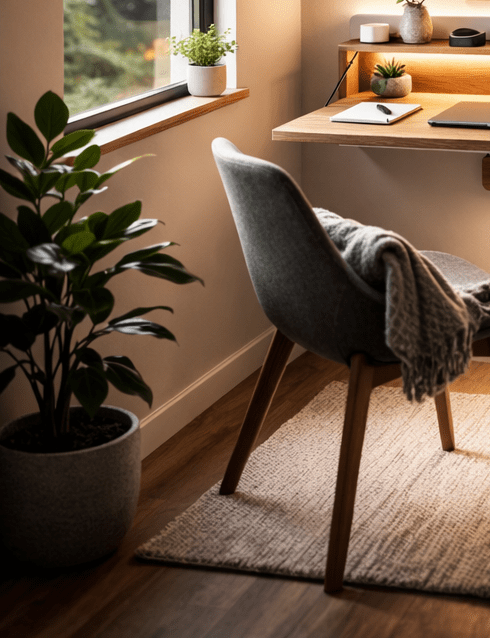
This is where Japandi moves from interesting to genuinely inviting. The aesthetic’s relationship with nature is what separates the best Japandi workspaces from the merely minimal ones. A single small plant on a desk is a start. But a Japandi office with real foliage — a larger plant in the corner of the room, trailing plants on a shelf, a cluster of smaller pots at different heights — feels like somewhere you actually want to be.
There’s something about the combination of light wood surfaces and abundant greenery that makes a workspace feel simultaneously designed and alive. The hard edges of furniture soften. The room breathes. It’s the version of Japandi that genuinely tempts — not the sparse, object-free interpretation that can feel more like a show home than a place of work.
Furniture with considered proportions
Japandi furniture tends toward clean lines and elevated profiles — legs that lift pieces off the floor, drawer units that don’t sit heavy and squat, chairs with slender frames. This isn’t about buying expensive designer pieces. It’s about proportions. A chest of drawers on thin legs reads very differently to the same storage sitting directly on the floor. The space underneath it matters — it keeps the room feeling open rather than weighted.
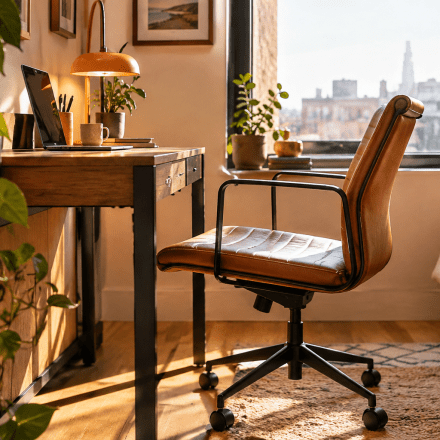
A simple Scandi-influenced chair with a slim profile and a cushioned seat in a muted tone fits the aesthetic naturally. Something that can move between rooms, that doesn’t dominate the space it’s in, that looks considered without being precious about it.
Deliberate, warm lighting
Natural light is the Japandi ideal — north or east-facing rooms that fill gently without harsh direct sun. In practice, most home offices don’t have the luxury of choosing their light, which means artificial lighting needs to do more of the work.
Warm-toned bulbs in the 2700K range, positioned to illuminate the desk surface rather than point at the screen, create the kind of ambient quality that the aesthetic is built on. Paper or fabric lampshades diffuse light softly. Exposed bulbs on cold white settings do the opposite of everything Japandi is trying to achieve.
Where Japandi can go wrong
The risk with this aesthetic, particularly in a workspace, is prioritising the visual over the functional. A desk stripped of everything except a single perfect object looks extraordinary in a photograph and genuinely difficult to work at.
Japandi is not the same as empty. The Japanese concept of ma — meaningful negative space — is about intentionality, not the absence of things. Objects that earn their place are part of the aesthetic. Objects that are there by default, that haven’t been considered, are what the aesthetic is editing out.
The practical version of this distinction: keep what you actually use, store everything else out of sight, and let the remaining objects — the lamp, the plant, the keyboard, the notebook — be chosen with some care for how they look alongside each other.
A note on personalising the aesthetic
Japandi is a starting point, not a prescription. The most liveable version of the aesthetic is usually one that’s been adjusted to suit the person working in it.
If pure Japandi feels slightly too cool for your taste — too uniform in its neutrality, too restrained in its palette — the answer isn’t to abandon the principles but to introduce warmth and variation within them. A warmer wood tone. A terracotta pot alongside the white ones. A desk lamp with a little more character. A keyboard in a colour that breaks the monotony slightly.
The technological objects that inevitably occupy a workspace — monitors, keyboards, cables — don’t have to fight the aesthetic. A dark monitor on a monitor arm, flat to the wall, reads as a considered object rather than an intrusion. A minimal keyboard in a neutral or natural tone sits more comfortably than a backlit gaming peripheral. The technology doesn’t disappear, but it stops competing for attention.
The version of Japandi worth building toward is the one that feels genuinely like yours — calm and considered, but not so edited that it’s lost the warmth that makes a workspace somewhere you want to return to every morning.
Where to start with your Japandi home office
If you’re approaching a Japandi home office from a blank slate, the order of decisions matters:
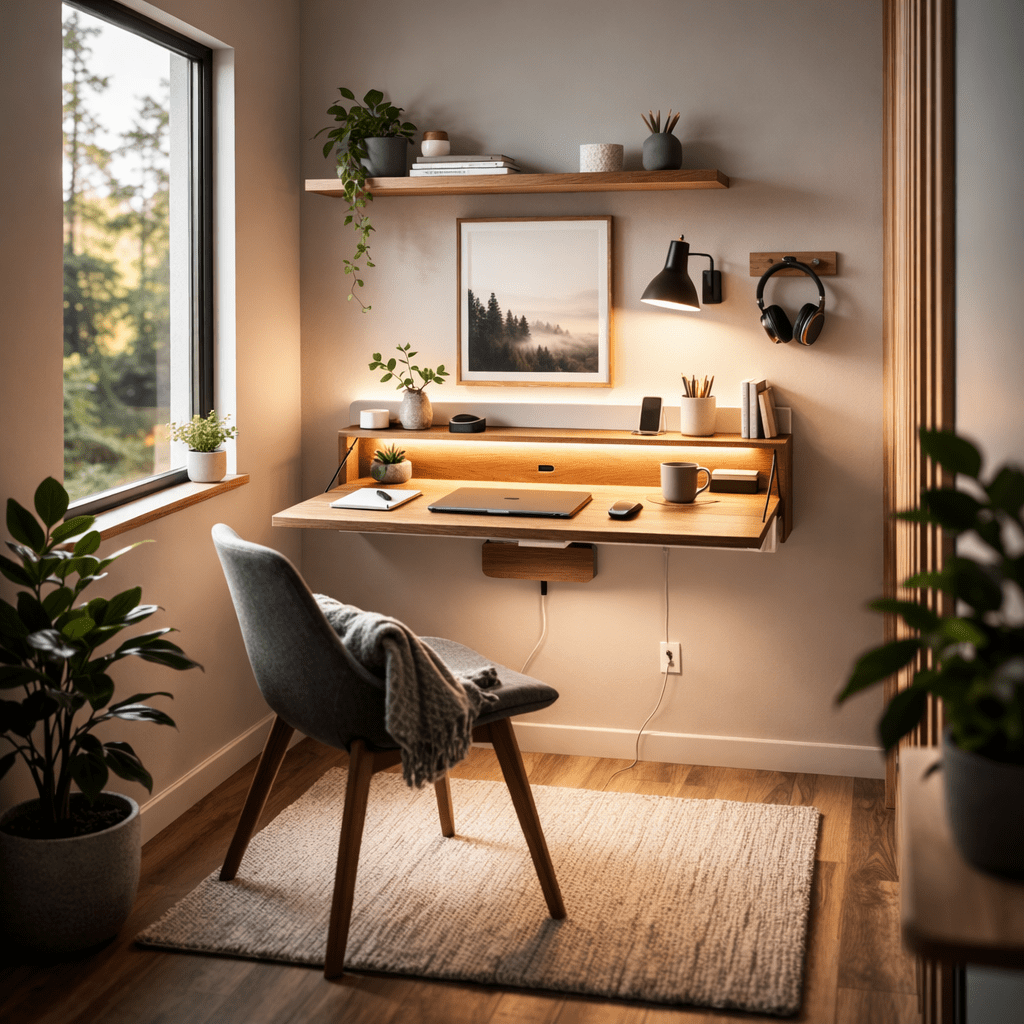
Start with the desk surface — light wood or a wood-effect surface in a pale, warm tone. This sets the direction for everything else. From there, keep walls and storage neutral, introduce plants early rather than as an afterthought, and choose a chair with clean proportions and a muted cushion rather than a mesh office chair that belongs in a corporate open plan.
Add lighting that’s warm and positioned well. Keep cables out of sight from the outset — a Japandi space with visible cable clutter immediately loses what it’s trying to achieve. And then, before adding anything else, sit in it for a week. The things that are missing will make themselves known. The things that are surplus will start to irritate you. Japandi is an aesthetic that rewards editing over time rather than assembling all at once.
That’s where the best versions of it come from — not a single purchasing decision, but a series of small, patient ones.