
Minimal Desk Setup for Small Calm Spaces
Designing a desk setup is hard enough. Designing one for a small space is where most setups fall apart.
Table Of Content
When space is limited, every decision feels louder. One extra object can tip a desk from calm to cluttered. A poorly chosen accessory can make the whole setup feel cramped, even if it’s technically “minimal.”
The good news? Small desks don’t need clever tricks or endless organisers. They need clear intent. When you design around how the desk is actually used, even the smallest setup can feel calm, focused, and intentional.
This guide breaks down how to design a minimal desk setup for small spaces — without sacrificing comfort, focus, or aesthetics.
Why Small Desks Feel Harder to Get Right
Small desks magnify mistakes. On a large desk, clutter can spread out and go unnoticed. On a small desk, everything sits in your line of sight. Visual noise builds quickly, and focus drops just as fast.
Three common challenges:
- No margin for error – Objects compete visually. Too many focal points make the desk feel busy, even with few items.
- Overcompensation with organisers – Trays, stands, and containers add bulk instead of clarity.
- Trying to make the desk do too much – Work, storage, display, charging — a multi-purpose desk rarely feels calm in a small space.
A good small desk setup isn’t about squeezing more in. It’s about deciding what the desk is actually for, and designing everything else around that single purpose.
Start With What the Desk Is For
Before adding anything, define your desk’s primary function. Ask yourself:
- Is this a space for deep work, creative projects, or quick tasks?
- Which objects do I need within arm’s reach for my main task?
- What can live elsewhere and only be brought in when needed?
Limiting your desk to one dominant function avoids distraction and gives even a tiny space room to breathe. Multi-purpose setups often feel messy because the desk is doing more than it can comfortably hold.
Think Vertically, Not Horizontally
When horizontal space is tight, vertical space becomes your best friend.
- Monitor arms free desk surface while positioning screens ergonomically.
- Floating shelves create storage without cluttering the workspace.
- Wall-mounted organizers keep tools handy but off the desktop.
The key is to balance accessibility with visual simplicity — don’t turn your walls into a chaotic extension of your desk.
Hide Desk Cables Like a Designer
Limit the Number of Objects, Not Their Usefulness
Small desks reward intention. Every object should serve a purpose:
- Multi-role items – e.g., a notebook that doubles as a mouse pad.
- Remove duplicates – one pen, one notebook, one charger.
- Essential-only approach – everything else goes in drawers or storage.
This isn’t minimalism for style — it’s minimalism for focus.
Minimalist Desk Setup Checklist for a Focused Workspace
Lighting Matters More When Space Is Tight
Proper lighting reduces visual strain and prevents the desk from feeling cramped.
- Clamp lamps attach to desk edges, saving space.
- Directional lights avoid glare on screens.
- Compact LED strips highlight workspace zones without clutter.
Small spaces exaggerate light issues, so thoughtful placement has an outsized effect.
Workspace Lighting: How to Design Lighting That Helps You Focus
Add One Element of Calm (Not Five)
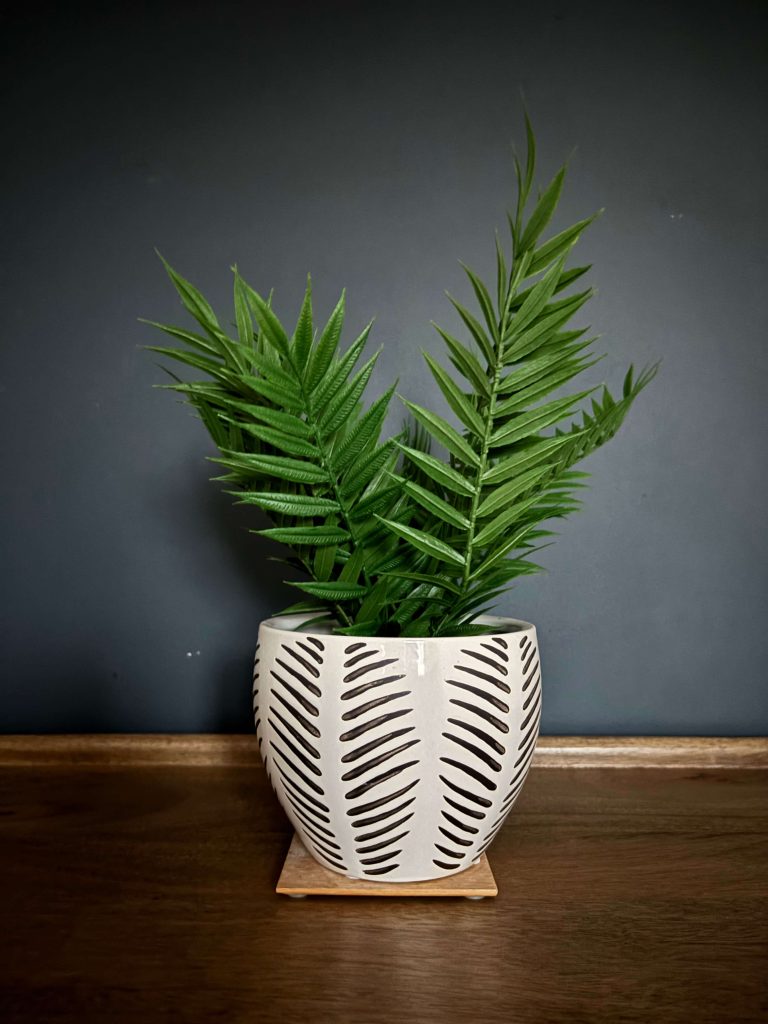
A small desk only needs one deliberate element of calm to anchor the space:
- A single plant or small terrarium
- One textured object (like a coaster, stone, or notebook)
- One personal item that inspires focus
Resist adding multiple decorative objects — every extra item competes for attention.
Office Desk Plants for a Calm, Focused Workspace
Common Small Desk Mistakes to Avoid
Even well-intentioned setups can feel chaotic. Avoid these:
- Oversized monitors that overwhelm the desk
- Too many organizers creating visual clutter
- Items with no designated home — if it doesn’t have a place, it creates noise
The goal is a desk that invites focus immediately when you sit down.
Closing Thoughts
Small desks don’t limit creativity — they reward intentional design.
When every object has a purpose, vertical space is used wisely, and visual calm is prioritised, even the tiniest setup can feel spacious, focused, and deliberate.
Remember: restraint beats cleverness, calm beats clutter, and a small desk done well will outperform a large desk done poorly every time.